Salmonella & Avian Influenza: One Health Strategy for Layers
At 5:00 AM on a cold March morning, Tomás walked into his layer house to find 200 birds dead. Within 48 hours, the diagnosis was confirmed: Highly Pathogenic Avian Influenza (HPAI) – H5N1. Two weeks later, his neighbor’s flock tested positive for multidrug‑resistant Salmonella Infantis. The old rules – seasonal biosecurity, treating Salmonella and Avian Influenza as separate problems – had failed.
The 2026 layer health landscape is different. HPAI is no longer a seasonal visitor but a resident threat in wild waterfowl. Meanwhile, antimicrobial‑resistant Salmonella serovars are rising, shrinking our treatment options. Insights from the European Symposium on Poultry Health confirm that siloed approaches no longer work.
The solution? A One Health biosecurity strategy that integrates wildlife management, targeted vaccination, and environmental DNA (eDNA) monitoring. This excerpt from Dr. Elena Martinez’s latest post reveals how to protect your flock and ensure egg supply chain stability in 2026.
[Read the full article →]
- Phone: +2349061679925
- Email: hakeemzubairu@gmail.com
- Experience: 15 Years
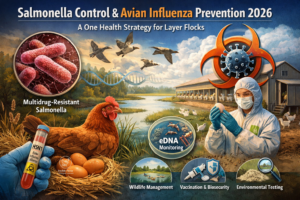
Navigating the 2026 Layer Health Landscape: Why Salmonella Control and Avian Influenza (HPAI) Prevention Demand a One Health Biosecurity Strategy
By Mr. Hakeem Zubairu (B.Tech Agro-Meteorogy)
MD DanHabi Zubairu Farms
Introduction: The Wake-Up Call
At 5:00 AM on a cold March morning, Atang, a third‑generation layer farm manager in Plateau State, walked into his Pen house 4 to find 200 birds dead. Within 48 hours, mortality climbed to 8%. The diagnosis came back: Highly Pathogenic Avian Influenza (HPAI) – H5N1 clade 2.3.4.4b. Two weeks later, his neighbour’s flock tested positive for multidrug‑resistant Salmonella Infantis.
Atang had followed all the old rules: seasonal biosecurity, spot vaccination, and treating Salmonella and Avian Influenza as separate problems. But the rules had changed.
The 2026 layer health landscape no longer tolerates a reactive, siloed approach. The convergence of HPAI and antimicrobial‑resistant Salmonella demands a proactive One Health biosecurity strategy – one that protects not only the chicken house but the entire farm ecosystem. Insights from the European Symposium on Poultry Health confirm that viral persistence in wild waterfowl and the rise of multidrug‑resistant Salmonella serovars are making traditional methods obsolete. To ensure egg supply chain stability and flock immunity, we must act differently.
The Rising Threat: Insights from the 2026 Symposium Circuit
The data emerging from recent European symposia highlights two distinct but interconnected challenges that every layer operation must address.
1. The Rapid Growth of Avian Influenza (AI) – From Visitor to Resident
We are no longer dealing with seasonal, self-limiting Avian Influenza outbreaks. The 2026 strains of HPAI (specifically H5N1 clades) have demonstrated a frightening new ability: persistence in environmental temperatures and a broader host range that includes more wild bird species and even mammals.
The key takeaway from the symposium’s virology sessions was the confirmation of endemicity in wild bird populations across migratory flyways. This means the HPAI virus is no longer a “visitor” that arrives in autumn and leaves in spring. It is a resident threat that requires 365‑day‑a‑year HPAI biosecurity vigilance.
For your layer farm, this translates to:
-
Permanent wild bird deterrence (netting, sound devices, habitat modification); they are carriers of both salmonella and the avian influenza.
-
Year‑round perimeter controls, not just during migration
-
Continuous environmental monitoring for viral RNA in water sources
2. The Salmonella Paradox – When Antibiotics Stop Working
While the industry has made significant strides in reducing Salmonella Enteritidis, the symposia highlighted a concerning uptick in Salmonella Infantis and Salmonella Typhimurium monophasic variants. These strains carry plasmid‑mediated resistance to multiple classes of antibiotics – including those considered critically important for human medicine.
The conversation has shifted from “how do we treat an outbreak?” to “how do we prevent colonization entirely?” Our therapeutic toolbox is shrinking due to both regulation (restrictions on prophylactic antibiotic use) and efficacy (rising minimum inhibitory concentrations).
Salmonella control in 2026 requires:
-
Targeted autogenous vaccines based on farm‑specific serovars
-
Competitive exclusion products (direct‑fed microbials) to block gut colonization
-
Routine environmental sampling for antimicrobial resistance genes
“One Health” – The Non‑Negotiable Approach
The One Health framework recognizes that the health of humans, animals, and the environment is inseparable. For a layer operation, this is not a philosophical concept – it is a practical, daily biosecurity protocol against Salmonella and Avian Influenza.
Wildlife Management is Flock Management
We can no longer focus solely on the chicken house. A One Health strategy requires aggressive management of wild bird attractants across the entire property footprint. This includes:
-
Covering or draining open water sources (ponds, puddles, manure lagoon edges)
-
Immediate cleanup of spilled feed around bins and load‑out areas
-
Rodent and pest control – rodents are mechanical vectors for both Salmonella and Avian Influenza
Keyword integration: HPAI biosecurity begins at the perimeter, not the barn door.
Antimicrobial Stewardship – Preserving Our Last Lines of Defense
With the rise of resistant Salmonella, we must preserve the efficacy of critical antibiotics by using non‑antibiotic interventions first. This means:
-
Autogenous vaccines – custom‑made killed bacterins using the exact Salmonella strains found on your farm
-
Competitive exclusion – administering beneficial bacteria that outcompete Salmonella for attachment sites in the gut
-
Organic acids and phytogenics – feed additives that reduce Salmonella load without selecting for resistance
Only when these measures fail – and under veterinary direction – should therapeutic antibiotics be used.
Environmental Monitoring – Early Warning Before Pathogens Enter the Store/Pen Houses
Moving beyond traditional boot swabs to environmental DNA (eDNA) testing is a game changer. By sampling:
-
Water sources (ponds, streams, wells)
-
Wild bird droppings around the perimeter
-
Airborne dust in ante‑rooms
…you can detect Salmonella and Avian Influenza genetic material before the live pathogen ever enters the layer house. This gives you days or weeks of lead time to ramp up disinfection, adjust vaccination schedules, and lock down store access.
Summary: The Path Forward
The convergence of Highly Pathogenic Avian Influenza (HPAI) and antimicrobial‑resistant Salmonella is forcing a fundamental shift in layer health management. Recent findings from European poultry symposia confirm that traditional siloed approaches – treating each disease separately – are failing. HPAI has become endemic in wild waterfowl, while multidrug‑resistant Salmonella serovars (e.g., S. Infantis) are on the rise.
To protect flocks and ensure egg supply chain stability, producers must adopt a One Health strategy that integrates human, animal, and environmental health. This means combining:
-
Enhanced biosecurity (wild bird deterrence, perimeter controls, water sanitation)
-
Targeted vaccination protocols (autogenous Salmonella vaccines + HPAI priming and boosters)
-
Environmental monitoring (eDNA testing of water and wild bird droppings)
The new approach moves beyond reactive treatment to proactive, system‑wide defense – ensuring that your layer operation can withstand both pathogens simultaneously. As Tomás learned after losing his flock, the old ways no longer work. But with the right strategy, you can write a different ending.
For more Details on our ultimate guide for biosecurity Checklist, click here